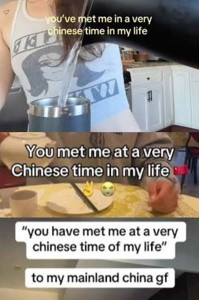
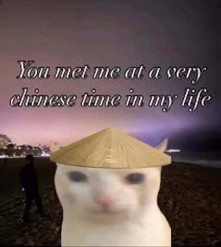
“Chinamaxxing” is a viral internet meme and lifestyle trend where Western young people actively adopt Chinese habits, aesthetics, brands, and cultural practices. This name is derived from the internet suffix “-maxxing”, which means optimizing a specific quality or activity. Simple examples of “Chinamaxxing” include drinking hot water, wearing indoor slippers, or buying trendy Labubu dolls. The phenomenon exploded in the digital domain between mid-2025 and early 2026. It grew out of a viral parody of the movie Fight Club, with users posting the caption, “You met me at a very Chinese time in my life” (Price, 2026). This trend has gained even more popularity through Chinese-American TikTok influencers, whose videos featuring everyday Chinese routines and habits have attracted millions of views.
The internet trend is intertwined with shifts in the geopolitical landscape: China’s post-pandemic visa-free travel policies for multiple countries sparked a boom in tourism to China, with many Western travellers posting videos of China’s ultra-modern cities and technological infrastructure on social media. Proponents view “Chinamaxxing” as a sign of China’s growing soft power. Although the government has long endeavoured to enhance its global cultural influence through various formal channels, this grassroots internet phenomenon has achieved something official media could not (Lee, 2026). For a younger generation of open-minded Westerners, the trend “humanizes” China, bypassing rigid geopolitical tensions and stereotypes to connect through lifestyles and cultural values. It also signals a shift in cultural authority: some Gen Z is becoming disillusioned with Western society, particularly US authority, highlighting a sense of “US dysfunction” (Theara, 2026).
Despite its popularity, the trend faces criticism: some argue that “Chinamaxxing” reduces a rich cultural heritage to a fleeting trend, essentially forming a modernized and digitized Orientalism, or a romanticized view of “the Other” (Lee, 2026). For both overseas and local Chinese, traditions and lifestyles that were once mocked or discriminated against—especially during the COVID-19 pandemic—are now suddenly being repurposed as trendy fashion items once they are adopted by Western social media. The reaction to “Chinamaxxing” also highlights a cultural divide. In the West, some view it as a harmless and interesting trend, while others see it as a propaganda tool of a political superpower. Some domestic reactions within China are positive and welcoming. Many people embraced the meme with humour, enthusiastically creating “citizenship guides” and response videos. At the same time, concerns have also been raised over the potential risks of cultural appropriation. “Chinamaxxing” serves as a complex digital culture case, highlighting how internet memes can evolve into intersections of cultural friction, cross-cultural communication, and geopolitics.
Price, J. (2026, January 15). 2026 is the Year Everyone Wants to “Become Chinese”: What to Know About the Viral TikTok Trend. Complex. https://www.complex.com/pop-culture/a/backwoodsaltar/viral-tiktok-trend-2026-become-chinese
Lee, I. (2026, March 23). When your culture becomes a meme: the “jarring” effect of Chinamaxxing. The Guardian; The Guardian. https://www.theguardian.com/lifeandstyle/2026/mar/23/chinamaxxing-chinese-culture-becomes-a-meme
Theara, C. (2026, April). Chinamaxxing: the American trend co-opting and romanticizing Chinese culture. The Week. https://theweek.com/culture-life/chinamaxxing-tik-tok-trend-chinese-culture